
Posted by Editorial Team on Nov 26th 2026
Portable Eyewash Stations: What Shops Need to Know
Last Updated: November 26, 2026
Quick Summary
Portable eyewash stations are self-contained emergency eye and face flushing units with their own potable water supply, so they work in shops, vans, and job sites with no plumbed line. They are most often used in body shops, welding bays, and mobile service trucks.
- Core requirements are a verifiable potable water supply, hands-free activation in under one second, and flow reaching both eyes.
- ANSI/ISEA Z358.1 sets the benchmark most safety officers cite, so check the standard overview before buying.
- A self-contained portable eyewash station carries its own tank and needs no water line.
- Gravity-fed models rely on a head of water in the tank, while pressurized units use stored air.
- Rich Tool Systems offers a team of friendly experts for consultation to help you select the right gear.
Table of Contents
- What are portable eyewash stations?
- Portable eyewash station requirements
- Self-contained portable eyewash station
- Pressurized portable eyewash station
- Portable eyewash station maintenance
- Choosing the right unit for your shop
- Frequently Asked Questions
What are portable eyewash stations?
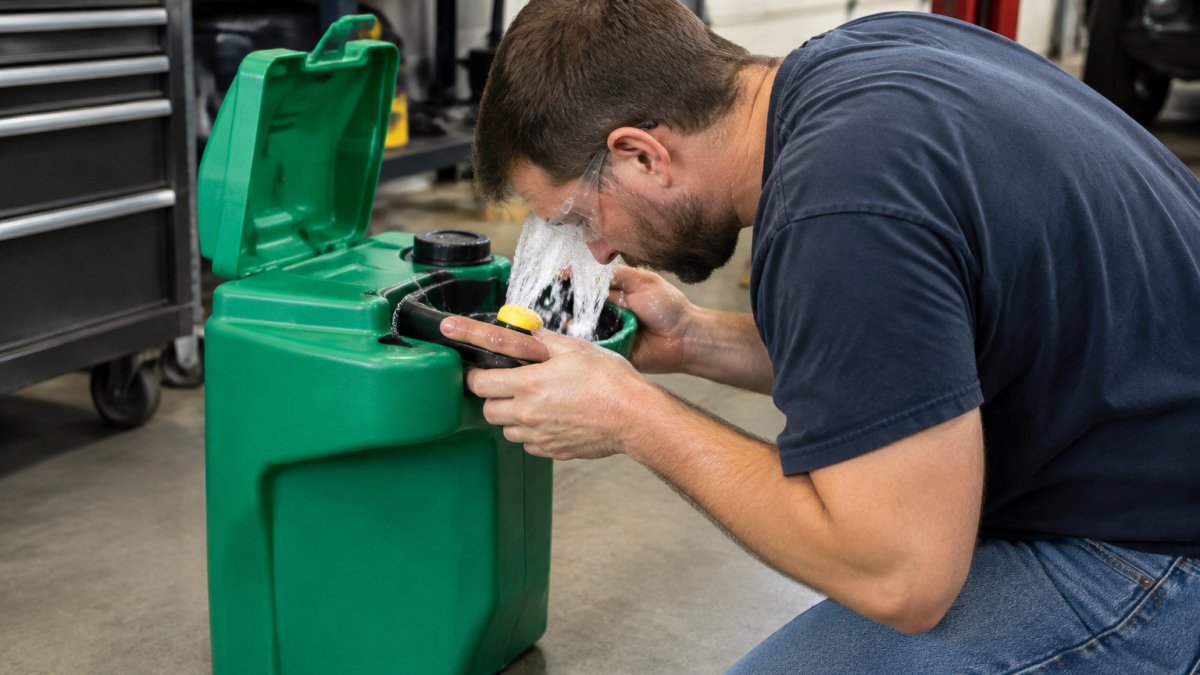
Portable eyewash stations are self-contained emergency eye and face flushing units with their own potable water supply, so they work in shops, vans, and job sites with no plumbed line. They are most often used in body shops, welding bays, and mobile service trucks.
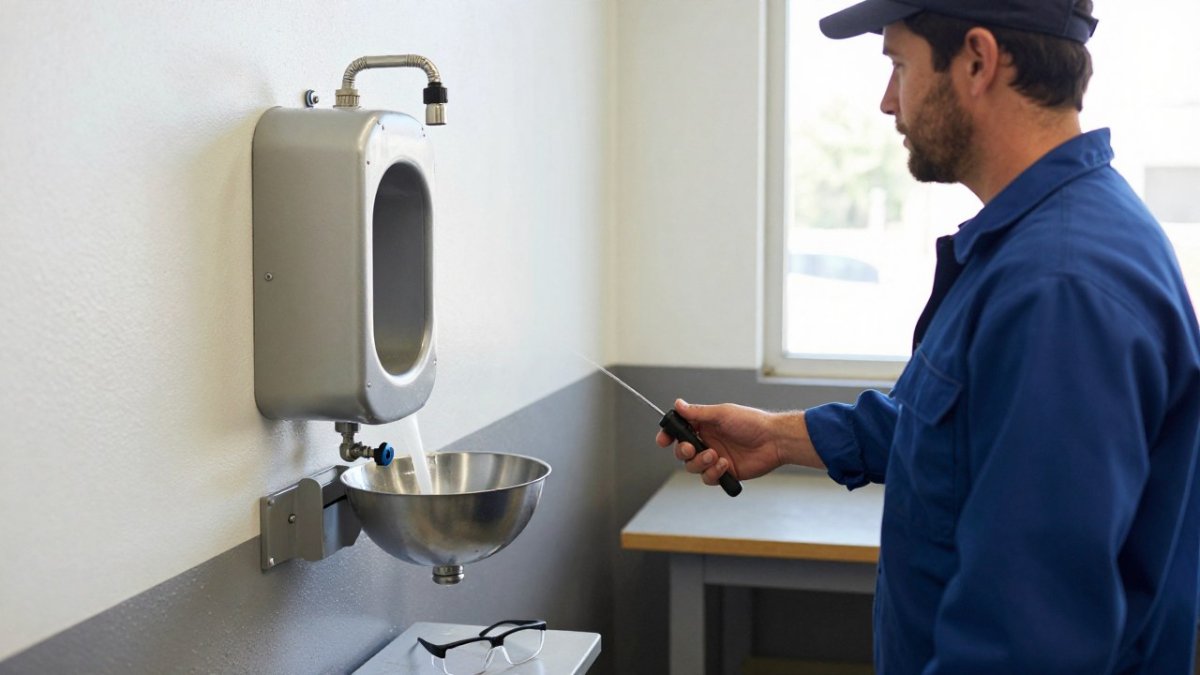
The man is American.
Portable eyewash station requirements
The core portable eyewash station requirements come down to three things: a potable water supply you can verify, hands-free activation that works in less than one second, and enough flushing flow to reach both eyes at once. ANSI/ISEA Z358.1 sets the benchmark most safety officers cite, so check the ANSI/ISEA Z358.1 eyewash standard overview before you buy. A unit that needs two hands to open a latch is not hands-free, and that mistake shows up in inspections.
Self-contained portable eyewash station
A self-contained portable eyewash station carries its own tank and needs no water line. Gravity-fed models rely on a head of water in the tank; pressurized units use stored air to push water out.
| Type | Water Source | Best For | Watch For |
|---|---|---|---|
| Gravity-fed | Tank, no air charge | Low-hazard bays, tight budgets | Weaker flow as tank drains |
| Pressurized | Tank plus air charge | Heavier chemical risk | Needs regular pressure checks |
| Plumbed | Building line | Fixed stations near water | No mobility |
Pressurized portable eyewash station
A pressurized portable eyewash station uses stored air pressure to push water out of the tank.
Portable eyewash station maintenance
Maintenance is an important part of keeping a portable unit ready for use. Follow the maker's guidance on water replacement and inspection.
Choosing the right unit for your shop
Consider the hazard, location, and user when choosing a unit. Rich Tool Systems offers a dedicated team of friendly experts available for consultation to help you select the right gear for your application. For current pricing and availability, contact Rich Tool Systems directly or visit its website for a quote.
Chemical exposure does not wait for a plumber, and neither should your safety plan. Rich Tool Systems stocks durable industrial safety equipment backed by over thirty years of experience and a team of friendly experts who help you pick the right gear for the job. Get started with Rich Tool Systems and equip your shop with reliable portable eyewash protection.
Frequently Asked Questions
What does OSHA say about portable eyewash stations?
OSHA requires eyewash facilities in workplaces where employees may be exposed to harmful chemicals or contaminants that can injure the eyes. The agency's 29 CFR 1910.151(c) standard says suitable facilities for quick drenching or flushing must be provided within the work area. Portable eyewash stations can meet this requirement when plumbed units are not practical, provided they deliver enough potable water for thorough eye flushing and are maintained in working order. Always check the specific standard for your industry.
Can a portable eyewash station replace a plumbed eyewash station?
A portable eyewash station can serve as a supplemental or primary option in locations without a plumbed water supply, such as remote job sites, mobile crews, or changing workspaces. However, it should not replace a plumbed station where one is required by code or where large volumes of hazardous chemicals are present. Portable units have limited water capacity, which constrains flushing duration. Use them where the hazard is lower or where plumbing is impossible, and follow the manufacturer's guidelines for capacity and flow.
How often should a portable eyewash station be inspected or maintained?
Inspect your portable eyewash station weekly to confirm it activates quickly, delivers a steady flushing flow, and shows no leaks or damage. Replace the water in self-contained tanks according to the manufacturer's schedule. For pressurized units, check the air charge and hose condition. Keep a log of inspections and water changes so you can show compliance during a safety audit.
