
Posted by Editorial Team on Nov 22nd 2026
How to Pick Budget Automotive Tool Sets for Home Mechanics in 2026
Last Updated: November 22, 2026
Quick Summary
Pick budget automotive tool sets by job coverage, not piece count: a 3/8-inch and 1/2-inch set with six-point sockets and a fine-tooth ratchet handles most home repairs. Read the warranty, since a lifetime ratchet warranty is the best durability signal a budget set offers.
- Most modern cars use metric fasteners, with 10mm, 12mm, 13mm, 14mm, 17mm, and 19mm doing most of the work.
- Budget ratchets in the entry tier often have 36 to 45 teeth, while mid-tier ratchets commonly run 60 to 72 teeth.
- A torque wrench and jack stands are safety-critical gap tools no budget set includes.
- Six-point sockets grip fastener flats better and round bolts less often than twelve-point sockets.
- A set advertising a lifetime warranty that excludes the ratchet shows exactly where it cut costs.
Table of Contents
- What Separates a Good Budget Automotive Tool Set From a Bad One
- Quick Comparison: Budget Automotive Tool Sets by Job Coverage
- The Best Mechanic Tool Kit for Home Use: What to Prioritize
- Essential Tools for DIY Car Repairs That Budget Sets Often Miss
- Finding a Mechanic Tool Set Under $200 That Still Holds Up
- Why a Complete Mechanics Tool Set With Box Beats Loose Tools
- Ratchet, Socket, and Drive Size Checks Before You Buy
- Choosing Your First Budget Automotive Tool Set
- Frequently Asked Questions
What Separates a Good Budget Automotive Tool Set From a Bad One
A good budget automotive tool set is one where the sockets, ratchets, and wrenches survive repeated torque without rounding fasteners or stripping their own teeth. Price alone tells you nothing. The difference between a set that lasts a decade and one that fails on the third oil change comes down to three things: steel quality, ratchet internals, and how honestly the piece count is labeled.
Rich Tool Systems has supplied automotive and industrial tools for over thirty years. Here is what most buyers get wrong: they shop by piece count. A 230-piece set looks like better value than a 90-piece set until you realize half those pieces are driver bits and hex keys you already own.
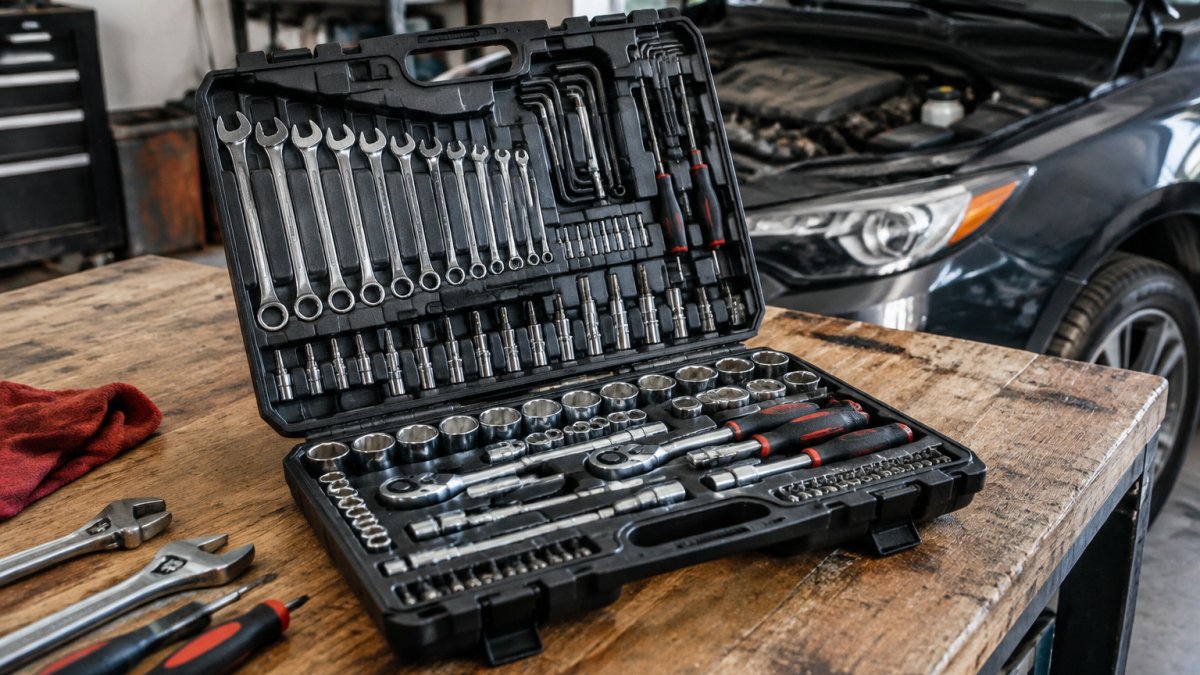
Automotive tool sets are collections of sockets, ratchets, extensions, and wrenches sized for vehicle fasteners, sold together in a storage case. The best ones prioritize the sizes you actually turn on a car over filler pieces that inflate the count.
Three quality signals matter more than the number on the box:
- Socket wall thickness and chrome finish. Thin, evenly plated walls resist splitting under load. Flaking chrome is a warning sign.
- Ratchet tooth count and back drag. More teeth means a smaller swing arc, which matters in tight engine bays.
- Warranty terms in writing. A lifetime warranty on the ratchet is the single best durability signal a budget set can offer.
Quick Comparison: Budget Automotive Tool Sets by Job Coverage
Judging budget sets by job coverage beats judging them by piece count. Below is how common set configurations map to real work, so you can match a kit to what you actually plan to do.
| Set Type | Typical Drive Sizes | Jobs It Covers | What It Misses | Best For |
|---|---|---|---|---|
| Starter socket set | 1/4-inch and 3/8-inch | Oil changes, battery terminals, interior trim, brake caliper bolts | Suspension, lug nuts, engine mounts | First-time DIY mechanic |
| Mid-size mechanic set | 3/8-inch and 1/2-inch | Brakes, suspension, alternator, starter, most engine bay work | Deep engine internals, specialty fasteners | Home mechanic doing regular maintenance |
| Complete mechanics set with box | All three drives plus wrenches | Broad repair and maintenance across most vehicles | Torque wrench, specialty and safety tools | Restorers and multi-vehicle households |
| Wrench-heavy set | Combination wrenches, minimal sockets | Line fittings, hose clamps, accessible bolts | Anything needing a ratchet and socket | Supplementing an existing socket set |
The pattern is consistent: the more drive sizes a set covers, the more jobs it handles. A kit with only 1/4-inch and 3/8-inch drives will stall the moment you reach a caliper bracket bolt that wants a 1/2-inch breaker bar.
That said, coverage is not the same as completeness. Every budget set below a certain price leaves gaps, and knowing which gaps to expect is how you avoid a second shopping trip mid-repair.
The Best Mechanic Tool Kit for Home Use: What to Prioritize
The best mechanic tool kit for home use covers the fasteners on your own vehicles. Prioritize the sizes your car actually uses, then confirm the ratchets can take real torque.
Start with your vehicle. Most modern cars and light trucks lean heavily on metric fasteners, with 10mm, 12mm, 13mm, 14mm, 17mm, and 19mm doing the bulk of the work. If you own an older truck or a classic, SAE sizes earn their place too. Buying a set heavy in sizes your car never uses is the most common budget mistake we see.
Next, check the ratchets. A 3/8-inch ratchet is the workhorse for home maintenance, and a 1/2-inch ratchet handles the high-torque jobs like lug nuts and suspension bolts. A 1/4-inch ratchet earns its keep on interior and small engine work. If a set includes all three, you are covered for most driveway repairs.
Then look at the case. A blow-molded case with labeled slots keeps sockets organized and makes missing pieces obvious. Latches that snap firmly matter more than they sound; a case that pops open in a trunk scatters your set across the driveway.
Essential Tools for DIY Car Repairs That Budget Sets Often Miss
The essential tools for DIY car repairs that budget sets routinely omit are the ones that turn a two-hour job into a two-day job. No socket set, at any price, includes everything. Closing those gaps adds cost on top of any set. Pricing for these tools depends on brand, quantity, and where you buy, so check Rich Tool Systems's website for current prices or request a quote.
Gap Tools You Will Likely Buy After the Set Arrives
- Torque wrench. Brake calipers, wheel lugs, and suspension bolts all specify a torque value. A budget set never includes one, and guessing is how bolts stretch or back out. This is the one gap tool you should not skip.
- Breaker bar. Budget ratchets dislike high torque. A breaker bar loosens stubborn fasteners so your ratchet does not pay the price.
- Deep sockets in common sizes. Lug nuts and some suspension fasteners need depth a standard socket cannot reach.
- Extensions in 3-inch and 6-inch lengths. Firewall and engine mount bolts sit where a bare socket will not fit.
- Universal joint. Front-wheel-drive applications hide fasteners at angles a straight socket cannot reach.
- Pliers and screwdrivers of real quality. Many sets include these as filler. A stripped Phillips head or a slipping pair of pliers costs more in frustration than a decent pair costs to buy.
- Safety gear. Jack stands and wheel chocks are not tools in the kit, but they are not optional either.
A common pattern is that the safety-critical items, the torque wrench and jack stands, are the ones buyers defer and the ones that matter most. A general mechanic set will not include a torque wrench, and it will not include anything that lifts or supports the vehicle. If you plan to do brakes, suspension, or any work under the car, those purchases belong in the same budget as the set itself.
Finding a Mechanic Tool Set Under $200 That Still Holds Up
A budget mechanic tool set can hold up for home use, provided you accept a trade-off: fewer drive sizes, or fewer pieces, or a shorter warranty.
At the entry end, a 1/4-inch and 3/8-inch socket set with a modest piece count, a basic ratchet in each drive, and a blow-molded case.
At the mid tier, the piece count climbs and a 1/2-inch drive usually appears, along with a few deep sockets and extensions.
Higher-priced sets usually include more pieces, all three drive sizes, and combination wrenches. The risk in this tier is filler: driver bits, hex keys, and specialty bits inflate the count while the ratchet internals stay budget-grade.
When shopping this range, look for three priorities. First, a strong 3/8-inch ratchet with a fine tooth count. Second, six-point sockets in the common metric sizes, since six-point grips flats better and rounds bolts less often than twelve-point. Third, a case that will survive being carried, dropped, and stored in a garage.
What most guides miss is that the ratchet, not the socket, is the budget set's failure point. Sockets are simple forgings and rarely fail first. Ratchets have internal pawls and springs, and that is where cheap manufacturing shows.
Watch out: a set that advertises "lifetime warranty" on the box but excludes the ratchet in the fine print is telling you exactly where it cut costs. Read the warranty card before you buy, not after the ratchet strips.
Rich Tool Systems offers a dedicated team of friendly experts available for consultation to help you select the right gear.
Why a Complete Mechanics Tool Set With Box Beats Loose Tools
A complete mechanics tool set with box wins on organization, completeness, and resale value, and the box is a bigger part of that than most people expect. Loose tools sound cheaper until you count the trips.
Buying individually means you will forget something. You will buy a 15mm socket, then discover you need a 16mm, then a deep 17mm, then an extension. Each trip costs time and gas, and the total creeps past what a set would have cost.
Organization is the quieter benefit. A labeled case means you can see at a glance that the 10mm is missing before you start the job, not halfway through. It also means the set travels: to a friend's driveway, to a track day, to a project car stored elsewhere.
There is a durability argument too. Tools stored loose in a drawer bang against each other and chip their chrome. A case holds each piece in place. For anyone restoring a vehicle over months, that matters.
The trade-off is honest: a set locks you into the manufacturer's choice of pieces. If you need a very specific selection, loose tools still make sense. For most home mechanics, the set is the better buy.
Ratchet, Socket, and Drive Size Checks Before You Buy
Drive size determines which jobs a set can handle, so check it before anything else. The three common drives are 1/4-inch, 3/8-inch, and 1/2-inch, and each has a clear role.
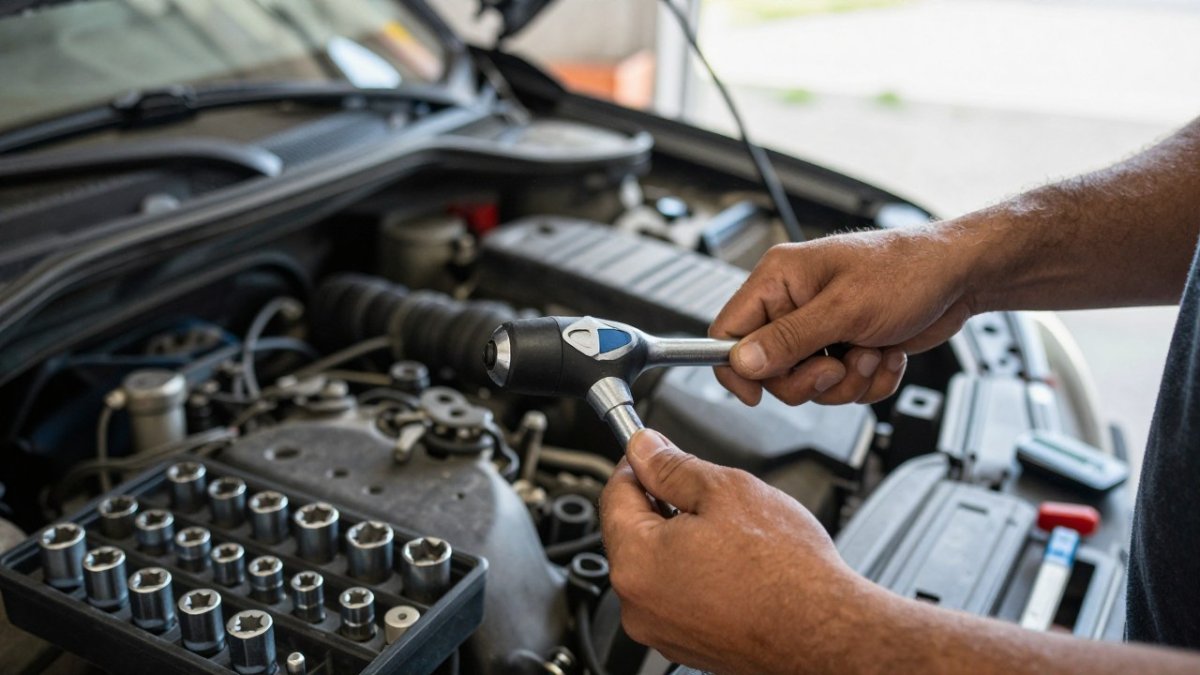
Drive size is the square dimension of the ratchet's anvil and the matching hole in each socket. A 1/4-inch drive suits small fasteners and tight spaces. A 3/8-inch drive is the general-purpose workhorse.
Then check socket points. Six-point sockets contact the flats of a fastener and resist rounding. Twelve-point sockets engage at more angles, which helps in cramped spots, but they grip corners and are more likely to round a stubborn bolt. For automotive work, favor six-point.
Finally, test the ratchet in your hand. A high tooth count gives a small swing arc, which is what lets you turn a bolt in a space too tight for a wide sweep.
Confirm SAE and metric coverage against your vehicle before you buy. A set that covers both is more useful, but only if the sizes you need are actually in the box.
Choosing Your First Budget Automotive Tool Set
Choosing your first budget automotive tool set comes down to matching coverage to your vehicle and your ambitions, then buying the best ratchet you can afford within that coverage. Do not chase piece count.
Work through it in order. Identify your vehicle's dominant fastener standard. Confirm the set covers the common sizes in that standard. Check that the ratchets cover 3/8-inch and, ideally, 1/2-inch drives. Read the warranty. Then, and only then, compare prices.
Buying budget friendly automotive tool sets for home mechanics is not about finding the cheapest box on the shelf. It is about finding the set that will not force you back to the store mid-job.
A budget set only pays off if it survives the job. Rich Tool Systems has spent over thirty years helping professionals and weekend mechanics pick gear that holds up, and our team will help you match a set to your vehicle and your plans rather than to a piece count. We stock a broad range of automotive and industrial tools at the market's lowest prices, back it with expert guidance on matching tools to specific jobs, and keep a reliable supply chain so the part you need is actually there. Get started with Rich Tool Systems and build a kit that handles every repair on your list.
Frequently Asked Questions
How many pieces should a home mechanic tool set include?
Most home mechanics get solid coverage from a set in the 200 to 300 piece range, but piece count alone is misleading. A 300-piece set padded with tiny bits and duplicate hex keys can cover fewer real jobs than a 150-piece set built around 3/8-inch and 1/4-inch drive sockets, combination wrenches, and extensions. Count sockets and wrenches first, check that both SAE and metric sizes are included, then treat the remaining pieces as extras. Automotive tool sets with fewer filler items usually deliver better value.
Is a budget mechanic tool set under $200 good enough for automotive repairs?
For routine maintenance like brake pads, oil changes, battery swaps, and suspension bolts, a well-chosen budget mechanic tool set handles most of the work. The weak points at this price are usually ratchet internals and thin-walled sockets, so check the ratchet's tooth count and warranty before buying. Expect to add a torque wrench, jack stands, and specialty sockets separately. Budget sets work well when you buy for the jobs you actually do, not for the biggest box on the shelf.
What tools should every home mechanic have beyond the set?
The essential tools for DIY car repairs that sets rarely include are a torque wrench, a breaker bar, jack stands, wheel chocks, a oil filter wrench, and a set of Allen and Torx sockets for modern fasteners. A magnetic pickup tool and a decent work light save hours on dropped bolts. Plan for these gap purchases when comparing sets, since filling them later can add meaningful cost. A complete mechanics tool set with box gets you started, but these items make it safe and practical.
Can a complete mechanic tool set replace buying tools individually?
For socket, ratchet, and wrench coverage, a complete set almost always costs less than buying the same tools one at a time, and the molded case keeps sizes organized. Where sets fall short is specialty work: fuel line disconnects, oxygen sensor sockets, and impact-rated sockets for stubborn bolts usually need to be bought separately. Start with a set that covers 1/4-inch, 3/8-inch, and 1/2-inch drive in both SAE and metric, then add individual tools as specific jobs demand them.
