
Posted by Rich Tool Systems on Apr 13th 2026
Spring Project Kickoff
Spring project kickoff: surface prep to final finish with the right abrasives and safety gear
Spring brings longer days, drier air, and a natural push to start projects that were queued all winter. Whether the work is a construction punch-list, an automotive refresh, or shop maintenance, outcomes hinge on two things that are easy to overlook at the start: choosing the correct abrasives for each stage and setting up safe, efficient workflows.
This guide walks through an end-to-end process from surface preparation through blending, finishing, and any necessary cutting or grinding. It also covers personal protective equipment (PPE) for warmer conditions, safe grinder practices, and practical tips for air tool care and hose reel placement on busy sites. A printable startup checklist is included so crews can hit the ground running.
Start clean: surface preparation that sets the tone
Good finishes begin with consistent prep. For curved panels, tight corners, and hand work, abrasive rolls and sandpaper give precise control.
- Abrasive rolls: Paper-backed rolls conform well on complex curves and are ideal for light-to-medium cut and fine finishing. Cloth-backed rolls resist tearing under edge pressure and last longer in demanding, repetitive work. If you need a durable option for frequent use, consider a cloth backed abrasive roll that balances flexibility with strength.
- Sandpaper sheets and discs: Match grit to the task, stepping from coarse to fine. Start in the P60-P80 range for stripping rust or heavy paint, then progress to P120-P180 for blending, and P220-P320 for primer-surfacer leveling or pre-polish prep.
For convenient stocking, shop a range of abrasive products designed for automotive and construction surfaces in one place. Explore options in abrasives to align grit, backing, and bond with your material and climate.
Blend and refine: flap and conditioning discs
After bulk cleanup and shaping, flap discs and surface conditioning discs transition the work from rough to uniform.
- Flap discs: Use a general-purpose zirconia or ceramic blend for steel and aluminum. These discs maintain a steady cut while reducing chatter, which helps prevent gouging on flat work. They are effective for weld blending, bevel smoothing, and edge rounding where control matters. See high-quality flap discs that balance life and finish consistency.
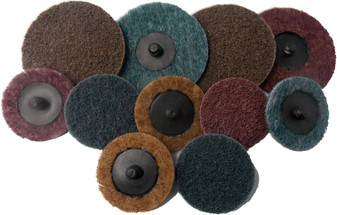
- Conditioning discs: When the goal is to de-scale, remove oxidation, or prepare bare metal for coating without changing geometry, non-woven conditioning discs excel. They gently erase scratches and surface discoloration and leave a uniform, paint-ready finish.
Quick-change discs in 2 inch and 3 inch formats are ideal for tight spaces, brackets, and inside corners. Keep a small assortment of coarse, medium, and fine grades to move efficiently from defect removal to final prep.
When the job calls for it: cutting and grinding
Not every project needs heavy stock removal, but when it does, proper wheel selection and grinder discipline matter.
- Cutting wheels: Choose thickness and bond type that match the material and the cut profile. Thin wheels produce faster, cooler cuts but are less forgiving of side pressure.
- Grinding wheels: For shaping and rework, match abrasive type and bond to the substrate to reduce vibration and extend service life. If you are refreshing a mixed-metal batch, keep dedicated wheels per material to avoid cross-contamination. Browse grinding wheels for durable options suited to construction and metalworking tasks.
Safe grinder practices in spring heat:
- Confirm guards are installed and intact, flanges are correct, and RPM rating on the wheel meets or exceeds the tool.
- Stand to the side during spin-up, and let the wheel reach speed before contacting the work.
- Wear safety glasses and a face shield; add hearing protection when working indoors or in reflective areas.
PPE for warmer days: comfort without compromise
As temperatures rise, comfort can impact compliance. Select PPE that protects while staying breathable.
- Work gloves: Mechanics-style gloves offer dexterity for fasteners and trim work, while heavy-duty or cut-resistant gloves protect during grinding and material handling. For hot conditions near engines, exhaust, or freshly cut metal, heat-resistant work gloves help maintain grip and focus. Explore durable work gloves for mechanics and general shop use to keep hands protected through long shifts.
Pair gloves with safety glasses that fit securely under a face shield, and consider light, moisture-wicking garments that do not snag on rotating tools.
Air tool readiness: hose reels, hose sizing, and upkeep
Busy bays and sites benefit from tidy hose management. Retractable reels reduce trip hazards and speed up tool changes.
- Reel placement: Mount retractable air hose reels on solid structure, align them with the main work area, and ensure straight hose travel to reduce wear. Avoid placing reels where hoses cross walkways or where vehicles turn sharply.
- Hose selection: A 3/8 inch rubber hose is a common shop standard for many air tools, balancing airflow and flexibility. Match inner diameter, length, fittings, and PSI rating to the compressor and tools in use. Inspect couplers for leaks and confirm secure connections at the start of each shift.
- Maintenance: Drain compressor tanks frequently in spring humidity and add tool oil as specified. Replace any hose sections that show cracking, flattening, or heat damage.
For a streamlined setup, review retractable air hose reels and 3/8 inch rubber air hose options that support consistent airflow and safer routing.
Complementary hand tools and cutting tools that save time
Spring startups are smoother when the essentials are organized and close at hand. Keep a labeled case with:
- Wrench sets and socket assortments for fasteners that vary across site equipment.
- Screw extractor sets for seized hardware found after winter weather.
- Drill bits matched to the material, including titanium coated for general work and higher-duty coatings for tougher metals. Explore cutting tools to round out your kit for tapping, threading, drilling, and removal.
Printable spring startup checklist
Use this short checklist during kickoff meetings and toolbox talks. Print, share, and initial as tasks are completed.
- Abrasives staged by task: abrasive roll or sandpaper for prep; flap discs for blend; conditioning discs for finish; cutting wheels and grinding wheels as needed.
- PPE ready: safety glasses, face shields, hearing protection, and heat-resistant work gloves for hot surfaces.
- Grinders inspected: guards installed, wheels rated and undamaged, flanges correct, test spin complete.
- Air system verified: compressor drained, filters checked, oil added, leaks fixed, retractable reel mounted securely with straight travel.
- Hoses inspected: correct diameter and length, no cracks or kinks, fittings tight.
- Hand tools organized: wrench sets, impact sockets, screw extractor sets, and a labeled drill bit set staged for common tasks.
- Housekeeping: clear walking paths, mark reel swing areas, designate a spark-safe grinding zone.
FAQ
- What are examples of abrasives?
Common examples include aluminum oxide and zirconia flap discs, non-woven surface conditioning discs, sandpaper sheets, abrasive rolls, cutting wheels, and grinding wheels. In sheet goods, aluminum oxide paper is typical, while cloth-backed rolls are used for heavier hand work.
- What is the most common abrasive?
Aluminum oxide is often the most widely used general-purpose abrasive. It balances hardness, durability, and cost, making it suitable for steel, wood, and many composites.
- What qualifies as industrial maintenance?
Industrial maintenance covers inspection, repair, and routine servicing of equipment and facilities to sustain safe, reliable operations. Typical tasks include replacing worn abrasives and wheels, lubricating air tools, draining compressors, inspecting hoses and fittings, tightening fasteners, and restoring damaged threads or surfaces.
Wrap up
A strong spring kickoff combines the right abrasive sequence, fit-for-purpose PPE, and a shop layout that prevents clutter. Small choices, like using cloth-backed rolls where tearing is likely or mounting hose reels to protect walkways, compound into faster, safer work. If you are updating your kit, explore categories like abrasives, flap discs, retractable air hose reels, and work gloves to round out your setup. For selection guidance or stocking questions, contact Rich Tool Systems for product recommendations that match your materials, workflow, and environment.