
Posted by Rich Tool Systems on Nov 13th 2026
Abrasives 101: Types, Uses, and How to Choose for Shop Work
If you cut, grind, blend, or finish metal, abrasives determine your speed, control, and final surface. Choosing well can mean fewer wheel changes, less rework, and safer shops.
This primer explains abrasive materials and bonds, breaks down common product types, clarifies grit and backing choices, and adds cold-weather tips and a quick selection matrix you can put to work today.
Rich Tool Systems supplies a broad range of abrasive products for professional shops and provides guidance to match the disc, wheel, grit, backing, and bond to the job.
What abrasives are and how they work
An abrasive is a hard, granular material used to remove stock from a surface by friction. Grains are embedded or bonded to a backing, then applied under pressure and motion to cut, blend, or finish.
Common abrasive materials:
Aluminum oxide: versatile, durable, cost-effective for steels and general metalwork.
- Zirconia alumina: tough, self-sharpening for heavy pressure on stainless and hard steels.
- Ceramic alumina: micro-fracturing, cool cutting for aggressive grinding on hard alloys.
- Silicon carbide: sharp and brittle for non-ferrous metals, composites, and fine finishing.
- Diamond and cubic boron nitride (CBN): superabrasives used mainly in precision grinding of very hard materials; diamond is not used on ferrous steels at high heat due to chemical wear.
Bond types hold grains in place and control release:
- Resin bonds (phenolic): the workhorse for discs and many wheels; balance life, cut rate, and heat resistance.
- Vitrified bonds: glass-like, rigid bonds used in precision wheels; cool cutting and shape-holding.
- Rubber and shellac (less common in this setting): specialty finishing and contact wheels.
Bond hardness matters. Harder bonds keep grains longer for aggressive cutting on steel and withstand higher pressure. Softer bonds shed dulled grains faster to expose sharp edges, which helps limit loading on aluminum and softer metals.
Core abrasive types for shop use
Sandpaper sheets and rolls: flexible, efficient for hand-sanding, block work, and DA sanders. Choose silicon carbide or aluminum oxide based on substrate and finish target.
- Flap discs: layered flaps on a backing for grinding and blending in one step. Excellent control on edges, radii, and welds for steel or aluminum when matched to the right grain and bond.
- Surface conditioning discs: non-woven, quick-change discs for cleaning, deburring, rust removal, gasket prep, and blending before paint. They resist loading and leave a uniform finish.
- Cutting wheels (cut-off): thin, reinforced wheels for fast, straight cuts in metal. Match thickness and bond to material and tool speed; inspect before use.
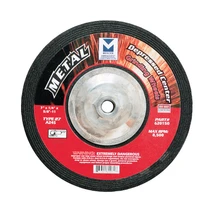
- Grinding wheels: depressed-center or bench styles for heavy stock removal, beveling, and shaping. Composition and bond should match the metal and pressure.
Explore the current range of abrasive products at Rich Tool Systems to compare sizes, grits, and formats that fit your workflow.
Grit ranges and when to use them
- Coarse (24 to 60): rapid stock removal, weld knockdown, heavy rust scale, edge shaping.
- Medium (80 to 120): blending, initial smoothing after grinding, feathering body filler.
- Fine (150 to 320): pre-paint prep, between-coat sanding, light deburring on aluminum.
- Very fine and micro (400+): final finishing, polishing prep, precision touch-ups.
Move progressively. Skipping too far increases time and can embed deep scratches that show under coatings.
Backing choices: paper vs. cloth
- Paper-backed sheets and rolls: flexible, conformable, and ideal for finishing curves and contours with lighter pressure. Great for hand-sanding, body panels, and fine finishing.
- Cloth-backed rolls and belts: stronger tear resistance and longer life under pressure. Choose cloth when you need durability, aggressive blending, or heavy, repeated use.
Rich Tool Systems offers both paper and cloth options, including shop rolls for consistent availability at the bench. For example, a cloth-backed abrasive roll can be a smart pick for frequent deburring and edge work.
Matching bond hardness to steel and aluminum
- Carbon steel and stainless steel: favor a harder bond with zirconia or ceramic grains for sustained pressure and edge retention. This helps reduce wheel wear and maintains cut rate.
- Aluminum and non-ferrous metals: use a slightly softer bond and open-structure designs to release dulled grains and reduce loading. Silicon carbide and well-opened aluminum oxide products help clear swarf and keep temperatures controlled. Apply light-to-moderate pressure to avoid heat build.
Cold-weather selection and storage
Cold, dense substrates can glaze and clog poor-quality abrasives. In winter:
- Choose consistent, sharp grain with durable backers that resist hardening.
- Let tools and consumables reach shop temperature before heavy use.
- Store abrasives in a cool, dry spot away from direct sunlight; keep them in sealed packaging until needed.
- Inspect cutting and grinding wheels for cracks or edge damage, and discard compromised products.
These steps help maintain cut, minimize chatter, and extend service life when the shop runs cold.
Simple selection matrix
Use this as a quick starting point, then fine-tune based on your tool, pressure, and finish requirements.
- Weld removal on carbon steel: flap disc, zirconia or ceramic, 36 to 60 grit, harder bond.
- Beveling mild steel plate: depressed-center grinding wheel, 24 to 46 grit, harder bond.
- Cutting stainless tube: thin cut-off wheel rated for stainless, inspect before use.
- Blending after weld on stainless: flap disc, zirconia or ceramic, 60 to 80 grit.
- Rust removal on frames: surface conditioning disc, medium grade, then fine for finish.
- Aluminum deburr and blend: cloth-backed aluminum oxide or silicon carbide, 80 to 180 grit, avoid heavy pressure to reduce loading.
- DA finishing before paint: silicon carbide paper, 220 to 400+ grit, consistent scratch control.
For a deeper look at wheel styles and use cases, see the grinding wheels page at Rich Tool Systems.
Short FAQ
- What is the abrasive meaning? It is a hard material used to wear away or finish a surface by friction. In practice, it is the grain and bond system that performs controlled cutting.
- What are examples of abrasives? Aluminum oxide, zirconia alumina, ceramic alumina, silicon carbide, diamond, and CBN. Products include sandpaper, flap discs, conditioning discs, cutting wheels, and grinding wheels.
- What is the most common abrasive? Aluminum oxide is the most widely used for general metalworking due to its durability and value.
- Is diamond abrasive? Yes. Diamond is a superabrasive used for very hard materials, though it is typically not used on ferrous steels at high heat.
- Is pumice stone abrasive? Yes. Pumice is a natural abrasive used for gentle smoothing and cleaning, more common in polishing and finishing than heavy metal removal.
Why shops choose Rich Tool Systems
Rich Tool Systems focuses on durable, consistent abrasive solutions for automotive, metal fabrication, construction, and industrial work. The team helps match grain, bond, grit, and backing to your application, with options across sandpaper, flap discs, conditioning discs, cutting wheels, and grinding wheels. You can also outfit bays with complementary shop tools and safety gear, including work gloves for protection during grinding and sanding, and specialized items across automotive tools and cutting tools when the job calls for it.
Browse the abrasives selection, check compatible grinding wheels for your grinders, and compare safety options like work gloves if you are updating PPE at the same time.
Summary and next step
Selecting the right abrasive comes down to the substrate, the operation, the grit progression, the backing, and the bond. For steel, lean toward harder bonds and tough grains; for aluminum, use softer bonds and open structures to limit loading. In cold weather, store and warm products appropriately and choose grains that maintain cut on dense materials.
Have a unique application or mixed-metal workflow? Contact Rich Tool Systems sales to match an abrasive to your exact process and improve finish consistency, safety, and tool life.
Internal links:
- Compare abrasive products at Rich Tool Systems: https://www.richtoolsystems.com/abrasives.html
- Explore grinding wheels and selection guidance: https://richtoolsystems.com/depressed_center_grinding_wheels.html
- See work gloves for shop safety: https://www.richtoolsystems.com/work_gloves.html
- Review automotive tools if you are updating bays: https://www.richtoolsystems.com/automotive_tools.html