
Posted by Rich Tool Systems on May 18th 2026
Abrasives 101: Types, Uses, and How to Choose for Shop Results
Abrasives 101: Types, uses, and how to choose for shop results
Abrasives are behind almost every clean cut, smooth blend, and accurate finish in the shop. Whether you are dressing welds, prepping a panel for paint, or cutting fasteners flush, the right product saves time and reduces rework.
This guide explains what abrasives are, how coated, bonded, and non-woven products differ, and which options fit common automotive, construction, industrial, and metalworking tasks. It also provides a quick selection framework by material, finish target, and duty cycle, plus practical notes on backing, bond, and grit. Close out with storage and inspection tips so your wheels and discs are ready when the job starts.
What abrasives are and how they work
At its core, an abrasive is any hard material used to wear away, cut, or refine another surface by friction. Abrasives function like controlled micro-cutters. Grain hardness, shape, and fracture behavior determine how aggressively the product cuts, how it resists heat, and how long it lasts.
Common abrasive minerals include:
- Aluminum oxide: durable, versatile for steel and wood
- Zirconia alumina (zirconia): tough, self-sharpening for heavy grinding on stainless and carbon steel
- Ceramic alumina: micro-fracturing grain for high-pressure, long-life grinding on hard alloys
- Silicon carbide: sharp, friable for non-ferrous metals, composites, and wet sanding
- Diamond and cubic boron nitride (CBN): superabrasives used in precision grinding and cutting of very hard materials
Coated vs. bonded vs. non-woven
Selecting by construction is often the fastest way to get to a workable short list.
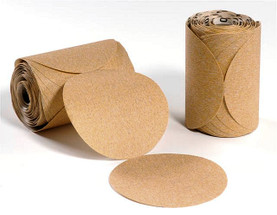
- Coated abrasives: Individual grains are bonded to a flexible backing such as paper, cloth, or film. Examples include sandpaper sheets, abrasive rolls, and flap discs. Best for shaping, stock removal, blending, and finishing with portable tools or by hand.
- Bonded abrasives: Grains are held together in a formed shape by a resin or vitrified bond. Cutting wheels and grinding wheels are the most common examples. Ideal for cutting, heavy grinding, and edge shaping on stationary or handheld grinders.
- Non-woven abrasives: A web of nylon fiber impregnated with abrasive grain and resin. Sold as surface conditioning discs and pads in various grades. Best for cleaning, rust removal, deburring, and creating consistent finishes without deep scratches.
Mapping products to tasks
- Sandpaper and abrasive rolls: Bodywork feather-edge sanding, primer prep, woodworking detail work, and light metal finishing. Paper-backed for flexibility on contours; cloth-backed for durability under higher pressure. See cloth backed abrasive roll options for durable hand-sanding in shop rolls.
- Flap discs: Weld blending, beveling, and mill-scale removal on steel and aluminum. The layered flaps keep presenting fresh grain for smooth, controlled removal. Explore flap discs for balanced cut and finish.
- Cutting wheels: Fast, clean sectioning of bar stock, bolts, angle, and tube. Choose wheel spec by material and thickness.
- Grinding wheels: Heavy stock removal, edge shaping, and weld cleanup. Pair composition and bond to the base metal to reduce chatter and heat.
- Conditioning discs: Paint and rust removal, gasket prep, and final surface conditioning before coating. Non-woven structure limits gouging and leaves a uniform scratch.
If you need a starting point for professional-grade selections, browse abrasive products organized by task and substrate.
Quick selection framework: material, finish, and duty cycle
- Identify the base material
- Mild steel: Aluminum oxide works for general use. For heavier pressure or longer life, move to zirconia or ceramic.
- Stainless steel: Prefer zirconia or ceramic to resist glazing and heat tint. Use contaminant-reduced specs when corrosion resistance matters.
- Aluminum and other non-ferrous: Silicon carbide or aluminum-oxide blends that resist loading. Use open-coat or stearate-treated coated abrasives; keep wheels sharp and avoid excessive heat.
- Define the finish target
- Rapid removal: Coarser grits (24 to 60) or hard bonds. Use grinding wheels or heavy-duty flap discs.
- Blend and refine: Medium grits (60 to 120) on flap discs or coated sheets; adjust pressure to control scratch depth.
- Pre-paint or fine finish: Fine grits (180 to 400+) on coated abrasives or non-woven conditioning in fine grade to unify the surface without deep scratches.
- Match the duty cycle
- Occasional/intermittent: Aluminum oxide often suffices; standard resin bonds.
- Frequent/medium duty: Zirconia balances speed and life; choose durable cloth backings.
- Heavy, continuous: Ceramic grains with tough resin bonds and heat-resistant backings extend life under pressure.
Backing, bond, and grit essentials
- Backing: Paper flexes around contours and is common for finishing sheets. Cloth backings resist tearing for higher-pressure hand or machine sanding. Fiber and reinforced backings on flap discs and resin fiber discs provide stability for aggressive use.
- Bond: Resin bonds dominate for shop discs and wheels due to heat resistance and strength. Softer bonds expose fresh grain faster for cool cutting; harder bonds hold grain longer for durability on tough edges.
- Grit size: Lower numbers are coarser and cut faster; higher numbers are finer and finish smoother. Step through grits instead of jumping from very coarse to very fine to minimize scratches and time.
Application snapshots by industry
- Automotive: Weld blending, panel prep, gasket removal, and brake hardware cleanup benefit from flap discs, conditioning discs, and shop rolls. Quick-change discs in 2 or 3 inches speed access in tight areas.
- Construction: On-site cutting of rebar and fasteners with cutting wheels; grinding wheels for bevels; sandpaper sheets for trim and paint prep.
- Industrial manufacturing: Consistent deburring and finish control with non-woven discs, plus long-life ceramic flap discs for stainless and high-strength steels.
- Metalworking and fabrication: Edge prep, mill-scale removal, and precision blending rely on matched wheel specs and flap discs to control heat and geometry.
For grinding wheel options sized for handheld grinders, review grinding wheels that are matched to common shop tasks.
Storage and inspection best practices
- Store in a cool, dry space away from sunlight and solvents. Keep items in original packaging until use and reseal after partial use.
- Organize by grit, material, and application so the correct product is easy to grab under time pressure.
- Inspect before use: look for cracks, chips, glazing, or frayed edges. Ring-test vitrified wheels where applicable. Discard damaged products.
- Manage heat: In cold weather, let products acclimate to shop temperature to reduce brittleness and clogging. In warm weather, avoid hot storage areas that soften bonds and warp backings.
Short FAQ
- What is the abrasive meaning? An abrasive is a hard material used to wear, cut, or smooth another surface through friction.
- What are examples of abrasives? Aluminum oxide, zirconia alumina, ceramic alumina, silicon carbide, and diamond are common abrasive materials. Product examples include sandpaper, abrasive rolls, flap discs, cutting wheels, grinding wheels, and surface conditioning discs.
- What is the most common abrasive? Aluminum oxide is typically the most widely used due to its durability and versatility across metals and wood.
- Is diamond abrasive? Yes. Diamond is a superabrasive used for cutting and precision grinding of very hard materials.
- What are examples of abrasive cleaners? Household abrasive cleaners often contain fine mineral particles such as silica, calcite, or feldspar. In shops, non-woven pads and fine abrasive powders are used for controlled cleaning and finishing on metal and composites.
- Is pumice stone abrasive? Yes. Pumice is a naturally abrasive volcanic glass used in stones, powders, and some finishing compounds.
Next steps and where to get help
Rich Tool Systems supports abrasive selection for automotive, construction, industrial, and metalworking work. If you need quick-access discs for small tools, see our 2 inch quick change sanding discs and related sizes. For flap wheel style blending, browse flap discs designed for balanced cut and finish.
For additional shop planning, explore our broader industrial supply lineup, including cutting tools and safety items like work gloves suited to abrasive tasks.
If you would like help matching a product to your material, finish target, and duty cycle, or you need a bulk quote, contact Rich Tool Systems for tailored guidance and current availability.
Internal links included for your convenience:
- Abrasive products: https://www.richtoolsystems.com/abrasives.html
- Flap discs: https://www.richtoolsystems.com/flap_discs.html
- Grinding wheels: https://richtoolsystems.com/depressed_center_grinding_wheels.html
- Industrial supply: https://www.richtoolsystems.com/
- Cutting tools: https://www.richtoolsystems.com/cutting_tools.html
- Work gloves: https://www.richtoolsystems.com/work_gloves.html
All Rights Reserved. Powered by BigCommerce. © 2026 Rich Tool Systems.