
Posted by Editorial Team on Nov 21st 2026
7 Air Saw Buying Mistakes That Cost You Money
Last Updated: November 21, 2026
Quick Summary
The best air saw for bodywork is a lightweight reciprocating model with a low-vibration body, a stroke rate matched to sheet metal, and a blade chuck that accepts standard 3-1/2 inch blades. Match the saw to the cut, not to the spec sheet, and check blade compatibility, compressor output, and how the tool feels at working height.
- Pick a reciprocating air saw first if you buy only one; it covers more jobs than a circular pneumatic saw.
- Use 18 TPI for thick metal and pipes, 24 TPI for sheet metal, and 32 TPI for fine cuts in thin panels.
- Compare the saw's rated CFM at 90 PSI against your compressor's delivered CFM at 90 PSI, not tank size.
- Use a 3/8 inch inside diameter hose and full-flow quick couplers to avoid pressure drop at the tool.
- Keep both saw types: air for the fixed bay, electric for mobile work and job sites without air.
Table of Contents
- Why the Wrong Air Saw Slows Down a Whole Shop
- How to Pick the Best Air Saw for Bodywork and Metal Cutting
- Air Saw Blades: Match TPI to the Material and Cut
- Air Saw Compressor Requirements Most Buyers Overlook
- Air Saw vs. Electric Saw: Which Fits Your Bay
- Get Matched to the Right Air Saw and Blades
- Frequently Asked Questions
Why the Wrong Air Saw Slows Down a Whole Shop
A pneumatic reciprocating saw that stalls mid-cut on a quarter panel costs a technician far more than the tool's sticker price. Shops often lose hours to the wrong air saw: too heavy for overhead exhaust work, too slow for sheet metal, or hungry for more air than the compressor can supply. An air saw is a compressed-air cutting tool that drives a short reciprocating blade through metal, plastic, and composite panels. Most buying guides stop at stroke rate. The real mistakes hide in blade matching, air consumption, and vibration.
Below, we break down the errors that quietly drain a shop's productivity, and how to avoid each one.
How to Pick the Best Air Saw for Bodywork and Metal Cutting
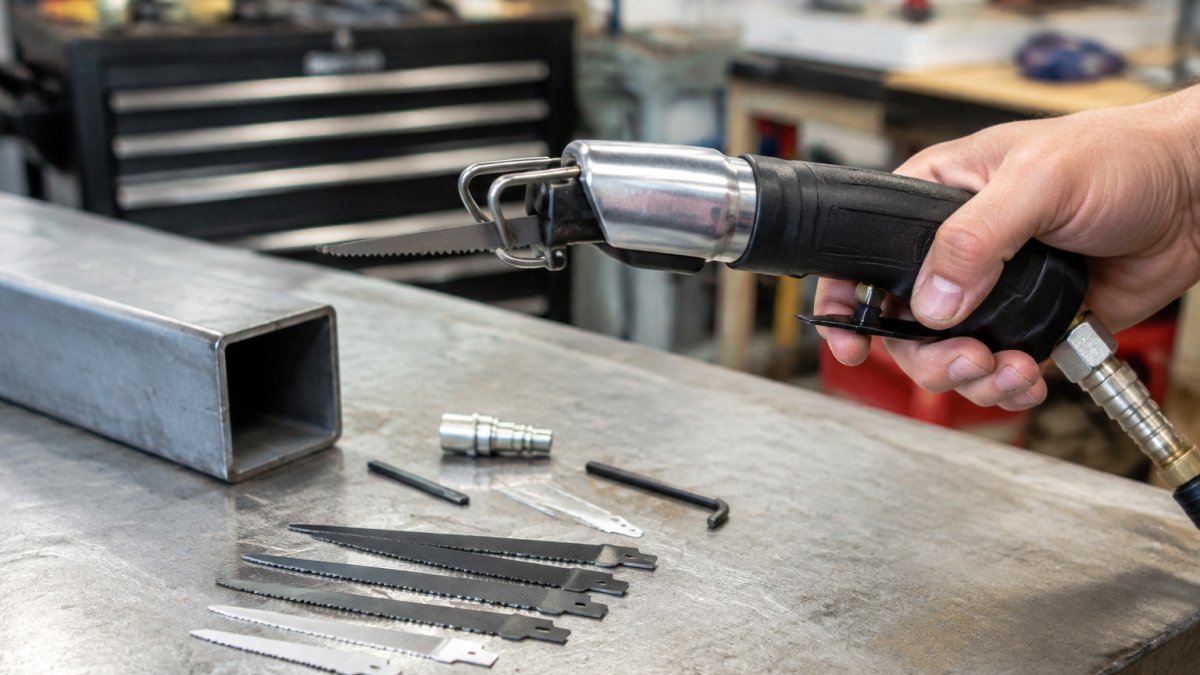
The best air saw for bodywork is a lightweight reciprocating model with a low-vibration body, a stroke rate matched to sheet metal, and a blade chuck that accepts standard 3-1/2 inch blades. Match the saw to the cut, not to the spec sheet. Many product listings show a stroke rate and a price without explaining how those numbers trade off against each other, so the comparison below organizes the specifications that actually decide whether a saw fits your bay.
Reciprocating vs. Circular Pneumatic Saws
Reciprocating air saws cut with a back-and-forth blade stroke and reach into tight spaces: muffler hangers, sunroof openings, firewall sections. Pneumatic circular saws spin a toothed disc and excel at long, straight cuts in flat sheet metal. Most auto body bays need both eventually, but if you buy one first, pick the reciprocating saw. It covers more jobs.
Stroke Rate, Weight, and Vibration Compared
Stroke rate, measured in strokes per minute, sets your cutting speed. Higher rates cut faster but amplify vibration. Weight matters most for overhead work: a saw that feels fine at bench height will burn your forearms after ten minutes under a rocker panel. Vibration control separates a tool you reach for daily from one that sits in the drawer.
| Spec | What to Look For | Why It Matters |
|---|---|---|
| Stroke rate | Matched to material thickness | Faster cuts without blade chatter |
| Weight | Light enough for overhead work | Less fatigue on long jobs |
| Vibration | Low-vibration body, comfort grip | Better control and finish quality |
| Blade chuck | Standard 3-1/2 inch compatibility | Easy blade swaps, lower blade cost |
| Air consumption | Within your compressor's output | No stalling mid-cut |
A Specification Comparison by Use Case
Rather than rank saws by one number, compare them the way the work actually breaks down. A compact bodywork saw and a heavy-duty exhaust saw differ on several axes that matter, and the table below shows the general trade-offs.
| Use case | Typical stroke rate | Typical weight | Air consumption | Blade type | Price tier |
|---|---|---|---|---|---|
| Sheet metal and body panels | Higher stroke rate for thin stock | Lightest class, for overhead control | Moderate CFM, steady demand | 24 to 32 TPI, 3-1/2 inch | Entry to mid |
| Exhaust and pipe | Lower stroke rate, more torque per stroke | Mid-weight, stable on long cuts | Higher CFM, longer duty cycle | 18 TPI, heavier blade | Mid to upper |
| Tight-access and trim | Moderate stroke rate, short stroke | Compact body, short nose | Low to moderate CFM | 24 to 32 TPI, short blade | Entry to mid |
| Heavy-duty fabrication | Lower stroke rate, high force | Heaviest class, built for continuous use | Highest CFM, needs a large compressor | 18 TPI, thick-gauge blade | Upper |
Pricing depends on quantity, dates, and delivery, so visit the Rich Tool Systems website for current prices or a quote. When comparing saws, consider the full set of included accessories and warranty terms along with the sticker price.
Watch out: a saw chosen on peak stroke rate alone may give up vibration control, and the fatigue can show up during long overhead work.
Air Saw Blades: Match TPI to the Material and Cut
Blade choice decides cut quality more than the saw itself. Teeth per inch, or TPI, sets the balance between speed and finish. Use 18 TPI for thick metal, rods, and pipes. Step up to 24 TPI for sheet metal and general bodywork. Choose 32 TPI for fine cuts in thin panels where a smooth edge matters. A common mistake is running a coarse blade through thin sheet metal: it grabs, tears, and warps the panel. Buy blades in bulk, keep a labeled tray by the bench, and swap before a blade dulls. Dull blades cost more in ruined panels than fresh blades cost in inventory.
Air Saw Compressor Requirements Most Buyers Overlook
A compressor that can't keep up turns a good saw into a stalling frustration. Air saws consume a steady stream of cubic feet per minute, or CFM, while cutting. Check the saw's rated CFM at its rated pressure, then compare that against your compressor's output at the same pressure, not its peak rating. A compressor rated for high CFM at low pressure may fall short at working pressure. Undersized supply lines and quick couplers choke flow, too. If your saw slows after thirty seconds of cutting, the compressor, not the saw, is usually the culprit.
The Numbers to Check Before You Buy
Air consumption varies by model, so check the rated CFM at 90 PSI on each saw's label before comparing it to your compressor. The saw's own label is the authority, and you should read it at the pressure you will actually run. A common pattern is a buyer comparing a saw's CFM against a compressor's tank size. Tank size is storage, not output. What matters is the compressor's delivered CFM at 90 PSI, which is usually lower than the peak figure printed on the box.
| Check | What to compare | Common failure |
|---|---|---|
| Saw demand | Rated CFM at 90 PSI | Comparing against peak CFM instead |
| Compressor output | Delivered CFM at 90 PSI | Relying on tank gallons |
| Working pressure | 90 PSI at the tool | Pressure drop through the line |
| Hose size | 3/8 inch inside diameter for most saws | 1/4 inch hose choking flow |
| Couplers and fittings | Full-flow quick couplers | Restrictive fittings cutting CFM |
Sizing the Compressor to the Saw
As a rule of thumb, size the compressor so its delivered CFM at 90 PSI meets or exceeds the saw's rated demand, with a little headroom for a second tool on the same line. A small compressor sized for a nailer may fall short on a reciprocating saw, which draws air continuously rather than in bursts. If your compressor cycles constantly and the saw bogs down mid-cut, the fix is more delivered CFM, a shorter or larger hose, or both, not a different blade.
Watch out: a long run of small-diameter hose with several quick couplers can drop pressure at the tool, so check pressure at the tool before blaming the equipment.
Air Saw vs. Electric Saw: Which Fits Your Bay
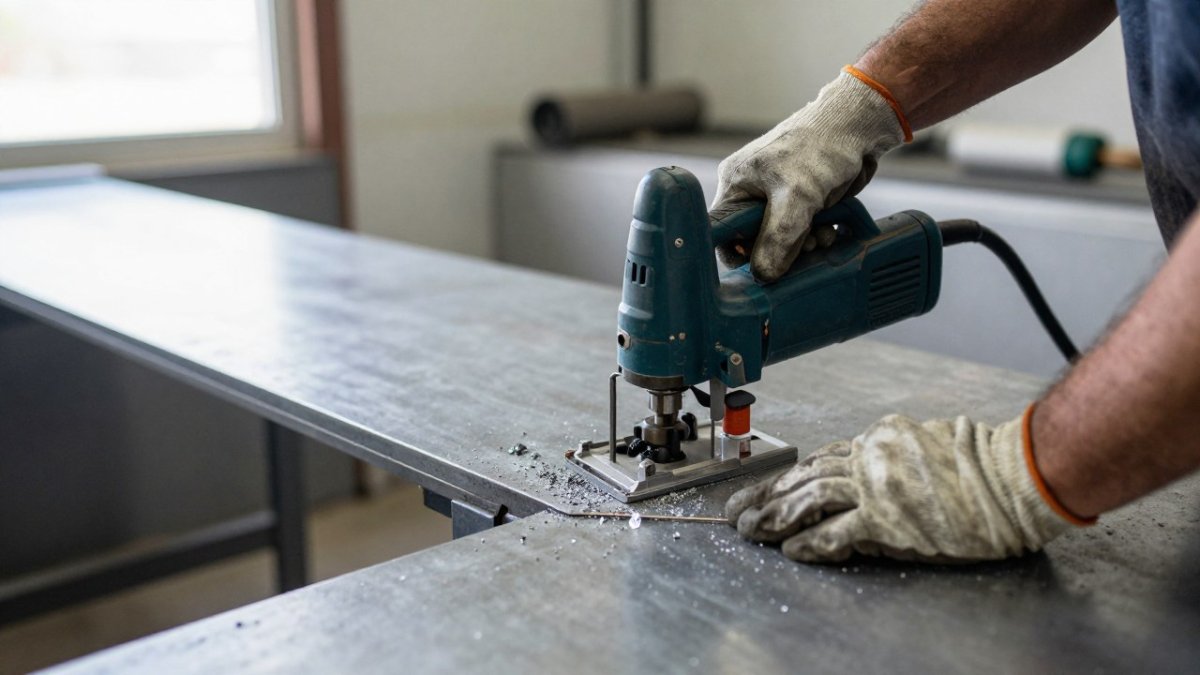
Air saws are often favored for size, weight, and continuous shop use, since they fit into tight spaces an electric body may not reach. Electric saws win on portability: no hose, no compressor. For a fixed bay with shop air, the pneumatic saw is the better daily driver. For mobile work and job sites without air, electric makes more sense. Many shops keep both: air for the bay, electric for the road.
Get Matched to the Right Air Saw and Blades
The right air saw comes down to three checks: blade compatibility, compressor output, and how the tool feels in your hand at working height. Get those right and the saw disappears into the job.
Choosing the right match between saw, blades, and air supply matters more than budget alone. That is where Rich Tool Systems can help: our team of friendly experts provides personalized support to help you select the right gear, including guidance on stroke rate, blade TPI, and compressor requirements. With over thirty years in the tool distribution market, we offer durable, top-tier products at the market's lowest prices.
Frequently Asked Questions
What is an air saw and what is it used for?
An air saw is a pneumatic cutting tool powered by compressed air through a reciprocating or circular blade. In body shops it handles sheet metal, exhaust pipe, rods, and panel cuts where an electric saw is too bulky to fit. Because the motor is air-driven, the tool stays compact and light, which matters when you are cutting overhead or inside a wheel well. Blade choice and stroke rate affect what a given saw can cut, so check the specifications on the model you are considering.
What air pressure and compressor capacity does an air saw need?
Check the tool's rated CFM at its rated pressure against your compressor's output at the same pressure, not its tank size. Pricing and specifications vary by model, so review each saw's label or contact Rich Tool Systems for guidance.
Which air saw blades work best for sheet metal versus exhaust pipe?
Blade selection depends on the material and cut, so match the blade to the job. Keeping a spare set on hand helps you avoid slowdowns from a dull blade.
How does an air saw compare with an electric reciprocating saw?
An air saw is often chosen for tight bodywork and shop use where compressed air is already available. An electric reciprocating saw needs no compressor, which suits job sites without air lines. Choose based on your bay setup and the materials you cut. If you cut wood and mixed materials away from a compressor, go electric.
